Matching Method to Routine: A UK Shopper's Guide to CBD Formats in 2026
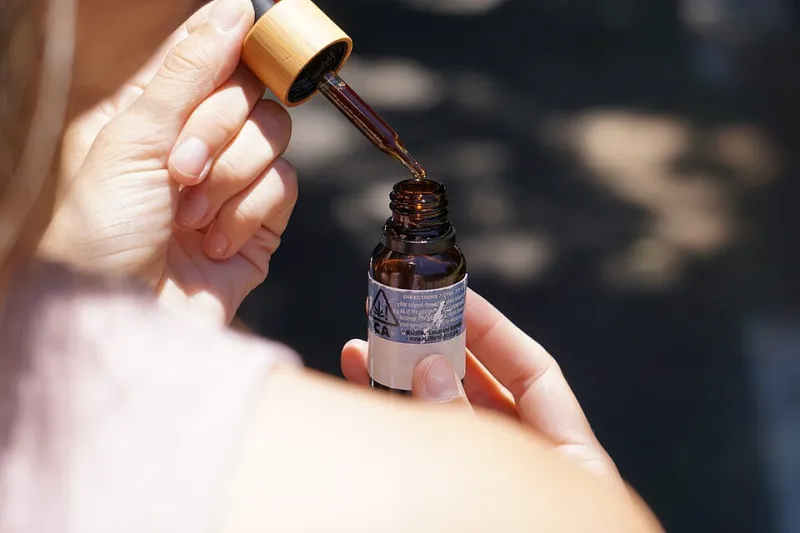
Photo: elsaolofsson, CC BY 2.0, via Wikimedia Commons
Walk into a UK health shop or browse a reputable online retailer in 2026 and the choice of CBD formats can feel broader than the guidance behind it. Oils, capsules, gummies and balms are often presented side by side, each with its own implied promise. The more useful question is not which format is objectively best, but which one suits the way a person actually lives: when they need it, how much time they have, whether they dislike strong tastes, and how willing they are to read a label properly.
CBD is not a medicine, and no format should be chosen on the assumption that it will treat a condition. For UK shoppers, the sensible starting point is a product with clear labelling, credible batch testing and a dose that can be measured without guesswork. Within that framework, format becomes a practical matter of routine.
Start with the routine, not the product
Before comparing onset times or cost per serving, it helps to answer a few plain questions. Is the product intended for a fixed daily moment, such as the end of the working day, or for occasional use? Does the user need discretion at a desk, on a train or in a shared kitchen? Are they comfortable with a dropper, or would they rather swallow a capsule and forget about it? Do they want a format that feels like a small ritual, or one that is as unremarkable as possible?
These questions matter because the most precisely dosed product in the world is of little use if it does not fit the moment in which it is meant to be taken. A format that demands attention may suit an evening routine and frustrate a lunchtime one. A format that is easy to carry may encourage casual use without a clear record of intake. The aim is not to find the perfect format in the abstract, but to find the one that can be used consistently and sensibly.
Oils and tinctures: control with a learning curve
Oils remain the format most associated with CBD, and they offer a high degree of control. A dropper allows the user to adjust the amount taken, and the bottle usually states the total CBD content alongside the volume. That sounds straightforward until the label is examined closely. Some products state the amount per millilitre, others per full dropper, and others only per bottle. A shopper who assumes that a 10ml bottle containing 1,000mg provides 1,000mg in every dropper is likely to be disappointed — and possibly taking far more or far less than intended.
Oils are often taken under the tongue, which gives the user a defined moment and a degree of ritual. Onset is commonly described as relatively quick compared with swallowed products, though individual experience varies. The practical drawbacks are taste, portability and the need to clean the dropper. Cost per serving can be competitive, but only when the label makes the serving size clear. Look for the carrier oil, the CBD type — isolate, broad spectrum or full spectrum — and the batch testing information. A product that mentions hemp seed oil prominently may contain little or no CBD at all.
Capsules: consistency for the routine-minded
Capsules appeal to people who prefer not to think about measuring. Each capsule contains a stated amount, so a daily routine can be recorded simply by counting. There is no taste, no dropper and no need to carry a bottle of oil. For a reader whose priority is a repeatable morning or evening habit, that simplicity can be more valuable than fine-grained control.
The trade-off is flexibility. A capsule cannot easily be split, and swallowing a capsule may not suit everyone. Onset is generally slower than with an oil held in the mouth, because the contents must pass through the digestive system. Labels should be checked for the amount of CBD per capsule rather than per container, and for the number of capsules actually supplied. A bottle that looks generous may contain fewer servings than expected. Cost per serving is usually easy to calculate, which makes capsules a useful benchmark when comparing formats.
Gummies: sociable format, stricter label reading
Gummies have become one of the most visible CBD formats, partly because they feel familiar and less clinical. They are easy to carry, easy to share in appearance and easy to take without water. For some users, that sociability is the point: a gummy fits into a handbag or a desk drawer and does not require a ritual.
That convenience comes with a need for discipline. Sweet formats can encourage casual overconsumption, and the sugar content may matter to readers who are otherwise careful about their diet. More importantly, gummies are a category where label reading must be especially strict. The amount of CBD per sweet can vary widely, and the stated serving size may be more than one gummy. In the UK, CBD edibles also sit within novel food rules, so shoppers should look for clear evidence that the product is being sold responsibly and that the brand provides batch testing and accurate cannabinoid content. Gummies are not automatically a lesser format, but they reward the reader who checks the small print rather than trusting the front of the packet.
Balms: local use, different expectations
Balms and topical products are often grouped with ingestible CBD formats, but they serve a different purpose. They are applied to the skin and are not intended to be swallowed. Comparing their onset and duration with an oil or capsule is therefore misleading. The relevant questions are about the base ingredients, the presence of other botanical extracts, and whether the product clearly states its CBD content.
For UK shoppers, balms can suit a local massage or skincare routine, but they should not be treated as interchangeable with an ingestible product. Cost per serving is harder to calculate because application varies, and the label may describe the amount of CBD in the whole tub rather than per application. A balm is best understood as a topical product with its own use case, not as a universal substitute for other formats.
Cost per serving and the small print
The most reliable way to compare value is to calculate cost per serving rather than cost per bottle. Divide the price by the number of servings the label actually provides, then check that the serving size is realistic. A product that claims 30 servings from a small bottle may be relying on a serving size far smaller than a user would naturally take.
Other label pitfalls recur across formats. Terms such as “full spectrum”, “broad spectrum” and “isolate” describe different cannabinoid profiles and should be explained by the brand. Batch testing certificates should be accessible, not buried. The THC content should be within UK limits, and the product should be clearly labelled as a food supplement or cosmetic rather than making medicinal claims. A shopper who checks these points is already ahead of much of the market.
A short decision checklist
- Choose oils if control, adjustable dosing and a defined ritual matter more than convenience.
- Choose capsules if consistency and no-fuss daily use are the priority.
- Choose gummies if portability and a familiar format are important, but read the serving size and CBD content carefully.
- Choose balms for topical use only, with clear expectations about how they differ from ingestibles.
- In every case, check the amount of CBD per serving, the batch testing, the THC statement and the cost per serving.
The format face-off has no single winner. The better question is whether the format fits the routine, the budget and the level of label scrutiny a shopper is prepared to apply. In 2026, that remains the most reliable form of CBD guidance for UK readers.