Forty-Eight Hours, One Format: Packing CBD for a British Short Break
A weekend bag is an exercise in restraint. Two nights in a cottage outside Bakewell, a Friday-to-Sunday in Whitby, a ferry hop to the Isle of Wight — the packing list is short, and the temptation to bring the whole shelf of bottles is strong. For CBD users, that temptation deserves resisting. A short domestic break rewards a narrow, well-chosen kit far more than a comprehensive one, and the reasoning is practical rather than puritanical.
Start with the label, not the pouch
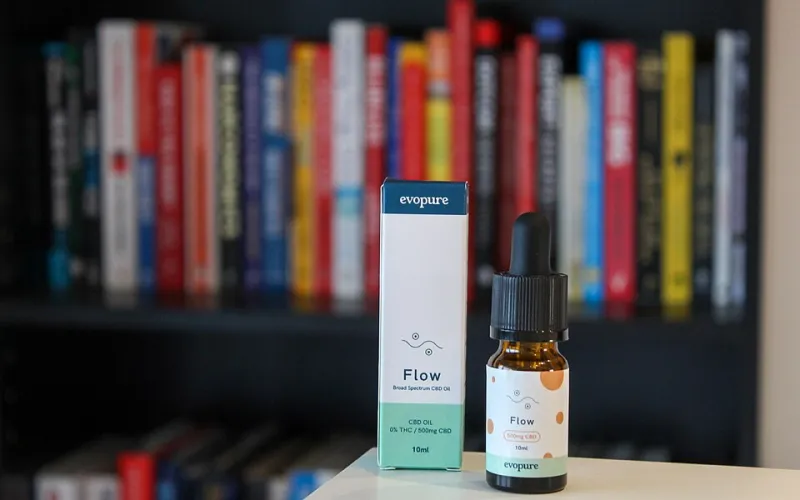
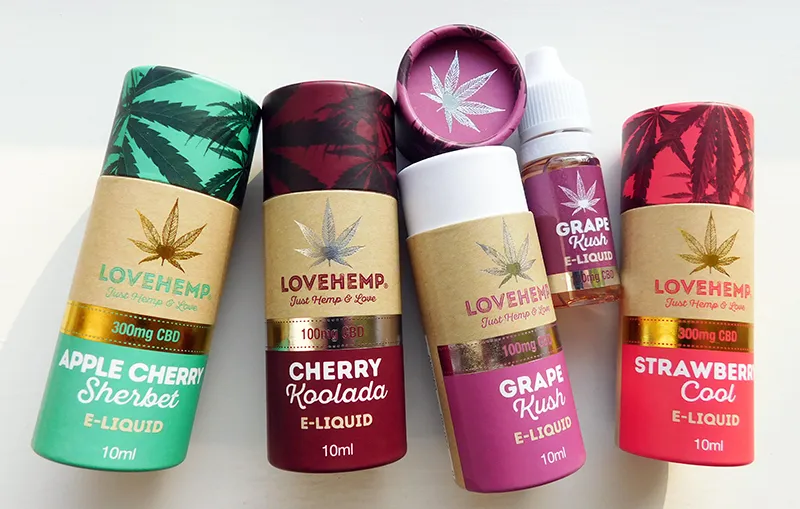
Before anything goes into the bag, the container itself has to earn its place. The label should be legible without a magnifying glass: product name, CBD content per serving, batch number and best-before date. If the print has worn away through months of rattling around a bathroom drawer, that is a reason to leave the product at home rather than a reason to guess.
A useful habit is to photograph the label on your phone before departure. The image takes seconds, weighs nothing, and settles any later question about which batch you are using or what the stated strength actually was. It is not a substitute for the packaging itself — the original container should still travel with you — but it is a sensible backup for a product that will spend two days in unfamiliar surroundings.
It is also worth noting, quietly, what serving size you actually take. Holidays disturb routines, and an unfamiliar setting is precisely where people drift from a measured spoon to an estimated one.
The one-format rule
For a 48-hour trip, take one format. Not two, and certainly not three.
The argument is not about weight. It is about decisions. A bottle of oil, a tub of capsules and a balm each carry their own instructions, their own storage preferences and their own explanatory burden if a companion or a cleaner happens to pick one up. Choosing a single format removes all of that in one move.
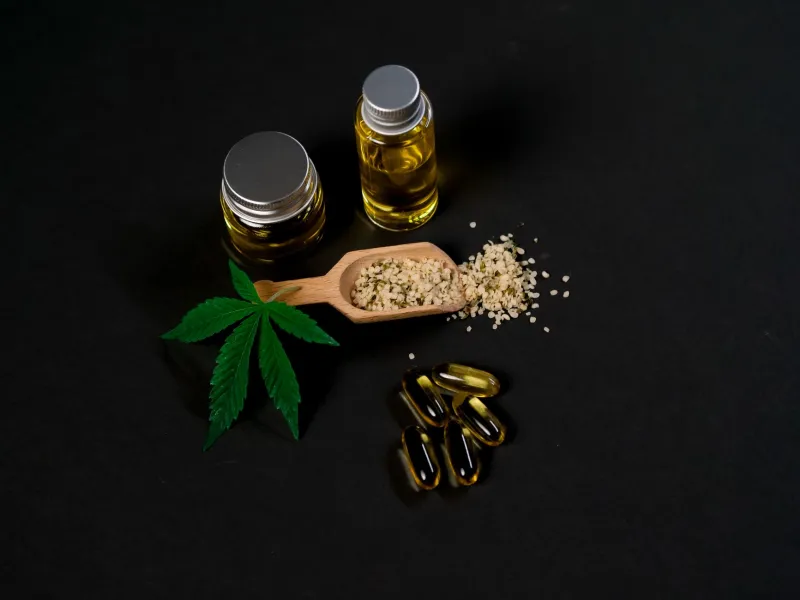
Which format to choose is a question best answered by your existing habit rather than by novelty. If your routine is already built around an oil taken in the evening, take the oil. If predictability matters more than flexibility, capsules are tidier — no dropper, no measuring, no spill risk in a suitcase. If your only established use is topical, a small balm tin is the obvious candidate. The principle is straightforward: the trip should replicate a habit you already have, not introduce one you have been meaning to try. A short break is a poor laboratory.
What may be decanted, and what may not
Space is often the stated reason for decanting, and it is rarely a good one. Oil moved into an unmarked amber dropper loses the batch number, the stated strength and the cautionary wording in a single pour. Whatever convenience is gained is outweighed by the loss of the information that makes the product traceable and the dose calculable.
Where volume is genuinely the issue, the answer is a smaller bottle of the same product rather than a smaller bottle of an unknown one. Capsules are best left in their original tub or blister. A balm may be transferred to a small tin only if that tin is labelled clearly with the product name and strength; an unlabelled tin of yellowish balm invites exactly the kind of question most travellers would prefer to avoid.
Three ways of travelling, three different problems
By train, the practical concerns are spillage and pressure. Oils should travel upright, ideally inside a zipped pouch rather than loose among clothes, and the pouch should go in the overhead bag rather than the case that gets wedged under a seat. Capsules tolerate movement well; glass does not.
By car, heat is the issue. A glovebox in July is a poor storage choice, and a bottle left on a sunny parcel shelf for an afternoon is worse. A cool bag in the footwell, or simply a bag kept out of direct sun, is adequate for a domestic journey. It is also worth remembering that the car will sit stationary at a service station while you eat, and that the interior temperature will climb accordingly.
By ferry, the position is generally uneventful for domestic routes — the Solent, the Scottish islands, the crossings to Northern Ireland. Keeping products in their original packaging and inside a washbag means that any query at a terminal can be answered by producing the container rather than by explaining from memory. Where a trip involves a flight, even a domestic one, the usual cabin liquid restrictions apply, which is another argument for capsules or a small, clearly labelled bottle.
The hotel room is not a bathroom shelf
Hotel bathrooms are humid, warm and frequently inspected. A towel rail is not a storage solution, and the shelf above a basin invites condensation and, eventually, a forgotten bottle.
A better arrangement is a zipped washbag kept in a drawer in the sleeping area, away from radiators and windows, with the product standing upright. The minibar fridge is best avoided: it is cold, damp and easy to forget on the morning of departure. Keeping the bag closed also reduces the likelihood that housekeeping will move or misplace anything, and it means that a product you would rather not discuss does not end up displayed beside the kettle.
Answering, or declining to answer
Travelling with a companion who does not use CBD raises a simple question: how much explanation is owed? Very little. A short, factual sentence is usually sufficient — that it is a CBD product bought legally in the UK, that the label states the amount per serving, and that it is part of an evening routine. Anything beyond that tends to sound like a defence, and a defence invites a debate.
Accommodation staff require no declaration at all. If a question does arise, the same brief answer serves. The more useful preparation is conversational timing: mentioning it before the weekend, rather than at breakfast on the second morning, spares everyone an awkward exchange.
What stays at home
The full collection. The 30ml bottle when a 10ml will do. Anything close to its best-before date. A new product you have not yet tried. A bottle with a cracked dropper or a cap that no longer seals. Each of these has a place in a considered routine, but none has a place in a bag packed for 48 hours.
A short checklist
- A photograph of the label, taken before departure.
- One format, chosen from your existing routine.
- The original container, with batch number and strength legible.
- A zipped pouch, kept upright.
- A cool spot in the car; a drawer rather than a bathroom shelf at the destination.
- A one-sentence answer, prepared in advance.
On the way back
A short break is also a useful audit. Note what you actually used, what you did not touch and whether the single format felt sufficient. That information, gathered over two nights, is more reliable than any amount of pre-trip deliberation — and it will make the next overnight bag lighter still.