The Price Tag Is Not the Potency: A UK Value Audit of Three CBD Budgets
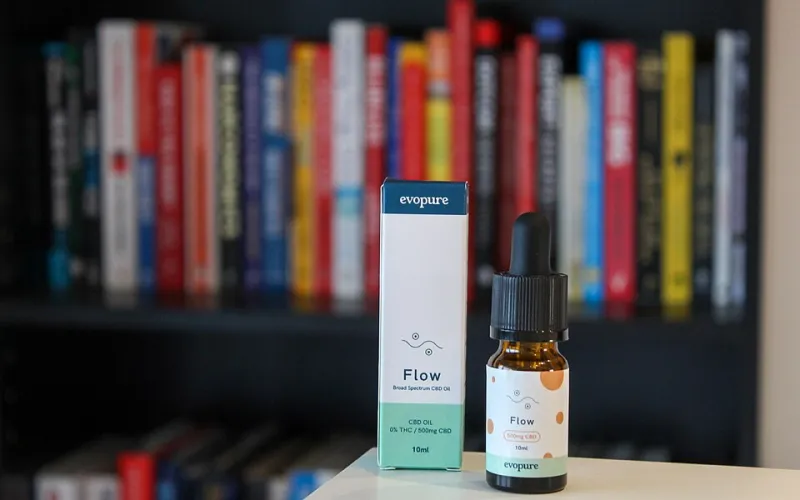
Photo: Evopure, CC BY-SA 2.0, via Wikimedia Commons
Walk into a UK health shop or open a CBD retailer's website in 2026 and the shelf can look deceptively simple. There is a £20 option, a £40 option and a £60 option, and it is tempting to read those figures as good, better and best. That reading is rarely reliable. Price is a commercial decision; value depends on what is inside the container, how many servings it provides and what the buyer is actually trying to do.
Three price points are not three grades
A £20 bottle and a £60 bottle may both contain 10ml of oil. The difference might be the total amount of cannabidiol, the carrier oil, the testing regime, the flavour, the bottle, the brand's overheads or the retailer's margin. Two products at the same price can also differ sharply in strength. The useful question is not 'Is £60 better than £20?' but 'What does the extra £40 buy me?'
The maths that survives the marketing
Start with total milligrams of CBD per container, not the words 'strong' or 'premium'. Then divide the price by the total milligrams to get a cost per milligram. For example, a £20 bottle containing 500mg works out at 4p per mg. A £40 bottle containing 1,000mg also works out at 4p per mg. A £60 bottle containing 2,000mg works out at 3p per mg. None of those examples is automatically the best buy; they simply show that a higher ticket can be fair, and a lower ticket can be expensive per milligram.
Next, work out servings. If the label says 10mg per serving, a 500mg bottle provides 50 servings. If it says 5mg per serving, the same bottle provides 100 servings. That changes the cost per use. A product with a vague serving suggestion — 'use as required' — is harder to budget for. Capsules are simpler because the serving is usually one capsule, but check whether the pack contains 30 or 60 and whether each capsule is 5mg, 10mg or more. A £20 pack of 30 capsules at 10mg contains 300mg in total, which is about 7p per mg. A £40 pack of 60 capsules at 10mg contains 600mg, which is also about 7p per mg. The ticket has doubled; the value per milligram has not.
What £20 tends to buy
At the lower end, shoppers often find a 10ml oil at a modest strength, a small capsule pack or a balm in a compact tube. This can be a sensible entry point if the aim is to try a format and see whether it fits a routine. The risks are vague labelling, a serving size that is hard to measure and a lack of batch-specific testing information. A low price is not a problem in itself; a low price with no clear milligram figure is.
What £40 tends to buy
The middle of the shelf is where clearer labelling, broader format ranges and more detailed testing information often appear. That does not mean every £40 product is well made. It means the shopper has more chance of finding the total milligrams, the serving size and a batch code without hunting. This tier can offer the most straightforward value for someone who has already decided on a format and wants a reliable repeat purchase. Watch for premium language about carriers or extraction methods that is not matched by clear numbers.
What £60 tends to buy
Higher-strength oils, larger bottles, specialist capsules and balms with more elaborate packaging are common at this level. Some of the extra cost is legitimate: more CBD per container, additional testing, smaller production runs or a format that is genuinely different. Some of it is shelf theatre. A heavier box, a magnetic closure or a pipette with a branded cap does not change the milligram count. Before spending more, ask what the additional money buys beyond the label.
Balms do not share the oil ledger
Cost per milligram is a useful starting point for ingested oils and capsules. It is less useful for balms. A 50ml balm containing 250mg at £20 works out at 8p per mg, but the product is applied to the skin and the amount used per application is not standardised. Compare balms on price per millilitre, the full ingredient list and the intended area of use. A balm is not a substitute for an oil, and a high milligram figure on a topical product does not automatically make it better value.
The extras that inflate the ticket
Packaging, flavour, organic certification, broad-spectrum positioning, QR codes and subscription discounts can all add to the price. Some of these are useful. Batch-specific certificates of analysis help a shopper check what is in the product. Clear allergen and ingredient information matters. A subscription can lower the unit price, but only if the product is actually used. Other extras are cosmetic. The question is always whether the extra cost supports the product or merely the presentation.
A fair-buy checklist
Before buying at any tier, check the total CBD per container, the CBD per serving, the number of servings, the cost per milligram and the cost per use. Look for a batch code and a certificate of analysis that matches it. Check the carrier oil and any other ingredients. Confirm the returns policy, especially for opened products. If the product is a balm, check the volume and whether it is intended for the area you have in mind. If the brand cannot answer basic questions before purchase, a higher price is not a substitute for transparency.
The question before spending more
The most useful question is not 'Which is strongest?' but 'What would the next £20 actually change?' If the answer is a clearer serving size, batch testing and a format that suits your routine, the extra spend may be fair. If the answer is a larger box and a more confident slogan, it may not be. In 2026, the UK CBD shelf offers plenty of choice; it does not offer a standard price-to-quality scale. Value is what remains after the marketing has been subtracted.
This article is general information, not medical advice.